
Contents
- 🎵 Origins & History
- ⚙️ How It Works
- 📊 Key Facts & Numbers
- 👥 Key People & Organizations
- 🌍 Cultural Impact & Influence
- ⚡ Current State & Latest Developments
- 🤔 Controversies & Debates
- 🔮 Future Outlook & Predictions
- 💡 Practical Applications
- 📚 Related Topics & Deeper Reading
- Frequently Asked Questions
- References
- Related Topics
Overview
Big data refers to data sets that are too large or complex to be handled by traditional data-processing software. It is characterized by its high volume, velocity, and variety, requiring specific technology and analytical methods to transform it into value. The analysis of big data poses several challenges, including capturing, storing, analyzing, searching, sharing, transferring, visualizing, querying, and updating the data, as well as ensuring information privacy and data sources. Big data was originally associated with three key concepts: volume, variety, and velocity, but a fourth concept, veracity, has been added to refer to the level of reliability of the data. With the increasing amount of data being generated, big data has become a crucial aspect of various industries, including healthcare, finance, and marketing. For instance, companies like Google and Amazon are using big data to improve their services and provide personalized experiences to their customers. According to a report by IBM, the global big data market is expected to reach $274 billion by 2026, with a growth rate of 13.3% per year.
🎵 Origins & History
Big data has its roots in the early 2000s, when the term was first coined by Douglas Laney, a Gartner analyst. At that time, the focus was on the three key concepts of big data: volume, variety, and velocity. However, as the field evolved, a fourth concept, veracity, was added to refer to the level of reliability of the data. Today, big data is a crucial aspect of various industries, including healthcare, finance, and marketing. For example, Johns Hopkins University is using big data to improve patient outcomes and reduce healthcare costs.
⚙️ How It Works
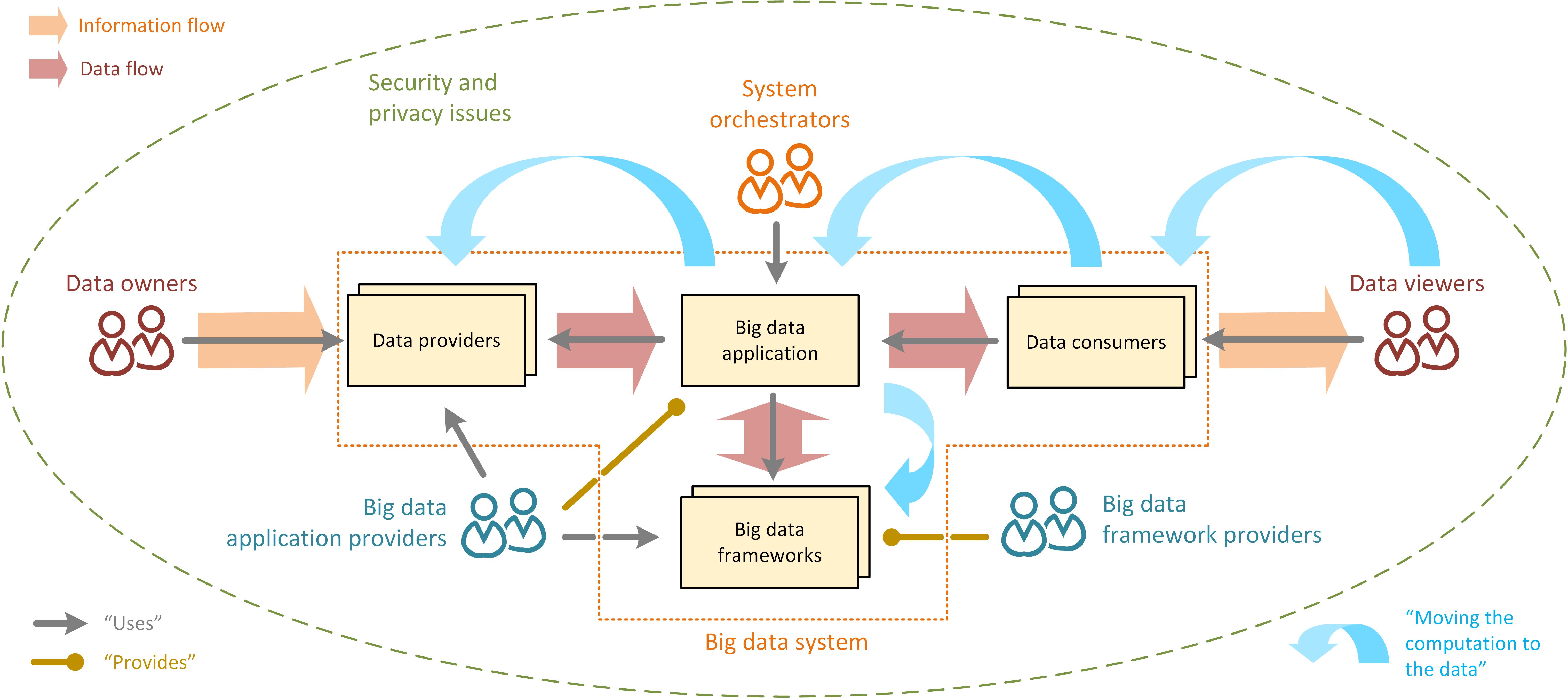
The process of working with big data involves several steps, including data ingestion, storage, processing, and analysis. Data ingestion involves collecting data from various sources, such as social media, sensors, and databases. Data storage involves storing the collected data in a scalable and efficient manner, using technologies such as Hadoop and Spark. Data processing involves processing the stored data using various algorithms and techniques, such as machine learning and deep learning. Finally, data analysis involves analyzing the processed data to gain insights and make informed decisions. Companies like Microsoft and Oracle are providing big data solutions to help organizations manage and analyze their data.
📊 Key Facts & Numbers
Big data is characterized by its high volume, velocity, and variety. The volume of big data refers to the large amount of data being generated, which can range from terabytes to exabytes. The velocity of big data refers to the speed at which the data is being generated, which can range from real-time to batch processing. The variety of big data refers to the different types of data being generated, which can include structured, semi-structured, and unstructured data. For instance, Twitter generates over 500 million tweets per day, which is an example of high-volume and high-velocity data.
👥 Key People & Organizations
Several key people and organizations have contributed to the development and growth of big data. Vincent Gruer, a big data expert, has written extensively on the topic and has developed several big data solutions. Cloudera is a company that provides big data solutions, including data storage, processing, and analysis. Apache is an open-source software foundation that provides several big data technologies, including Hadoop and Spark. Additionally, Stanford University is a leading institution in big data research and education.
🌍 Cultural Impact & Influence
Big data has had a significant impact on various aspects of society and culture. It has enabled organizations to make data-driven decisions, improve customer experiences, and optimize operations. However, it has also raised concerns about privacy, security, and ethics. For example, the use of big data in healthcare has improved patient outcomes, but it has also raised concerns about patient data privacy. Companies like Facebook and Google have faced criticism for their handling of user data, highlighting the need for better data governance and regulation.
⚡ Current State & Latest Developments
The current state of big data is rapidly evolving, with new technologies and techniques being developed to handle the increasing amount of data being generated. The use of artificial intelligence and machine learning is becoming more prevalent, and the development of new data storage and processing technologies is enabling organizations to handle larger amounts of data. For instance, NVIDIA is developing specialized hardware for big data processing, and Amazon Web Services is providing cloud-based big data solutions.
🤔 Controversies & Debates
There are several controversies and debates surrounding big data, including concerns about privacy, security, and ethics. The use of big data has raised concerns about the potential for organizations to misuse personal data, and the lack of transparency and accountability in big data analytics. Additionally, the development of big data technologies has raised concerns about the potential for job displacement and the widening of the digital divide. For example, the use of big data in policing has raised concerns about racial bias and discrimination.
🔮 Future Outlook & Predictions
The future of big data is expected to be shaped by several trends, including the increasing use of artificial intelligence and machine learning, the development of new data storage and processing technologies, and the growing importance of data governance and regulation. As the amount of data being generated continues to grow, organizations will need to develop new strategies and technologies to handle and analyze the data. For instance, Intel is developing new technologies for big data processing, and IBM is providing big data solutions for various industries.
💡 Practical Applications
Big data has several practical applications, including improving customer experiences, optimizing operations, and enabling data-driven decision-making. It is being used in various industries, including healthcare, finance, and marketing. For example, Walmart is using big data to improve its supply chain management, and American Express is using big data to improve its customer service.
Key Facts
- Year
- 2001
- Origin
- United States
- Category
- data-science
- Type
- concept
Frequently Asked Questions
What is big data?
Big data refers to data sets that are too large or complex to be handled by traditional data-processing software. It is characterized by its high volume, velocity, and variety, requiring specific technology and analytical methods to transform it into value.
What are the key concepts of big data?
The key concepts of big data are volume, velocity, variety, and veracity. Volume refers to the large amount of data being generated, velocity refers to the speed at which the data is being generated, variety refers to the different types of data being generated, and veracity refers to the level of reliability of the data.
What are the practical applications of big data?
Big data has several practical applications, including improving customer experiences, optimizing operations, and enabling data-driven decision-making. It is being used in various industries, including healthcare, finance, and marketing.
What are the challenges of working with big data?
The challenges of working with big data include capturing, storing, analyzing, searching, sharing, transferring, visualizing, querying, and updating the data, as well as ensuring information privacy and data sources.
What is the future of big data?
The future of big data is expected to be shaped by several trends, including the increasing use of artificial intelligence and machine learning, the development of new data storage and processing technologies, and the growing importance of data governance and regulation.
How is big data related to other topics?
Big data is related to several other topics, including data science, machine learning, and artificial intelligence. It is also related to several industries, including healthcare, finance, and marketing.
What are the benefits of using big data?
The benefits of using big data include improving customer experiences, optimizing operations, and enabling data-driven decision-making. It can also help organizations to reduce costs, improve efficiency, and increase revenue.
What are the risks of using big data?
The risks of using big data include concerns about privacy, security, and ethics. The use of big data has raised concerns about the potential for organizations to misuse personal data, and the lack of transparency and accountability in big data analytics.