
Contents
- 🎵 Origins & History
- ⚙️ How It Works
- 📊 Key Facts & Numbers
- 👥 Key People & Organizations
- 🌍 Cultural Impact & Influence
- ⚡ Current State & Latest Developments
- 🤔 Controversies & Debates
- 🔮 Future Outlook & Predictions
- 💡 Practical Applications
- 📚 Related Topics & Deeper Reading
- Frequently Asked Questions
- References
- Related Topics
Overview
Deep learning is a subfield of machine learning that focuses on using artificial neural networks with multiple layers to analyze data. Inspired by the structure and function of the human brain, deep learning algorithms can learn and improve on their own by adjusting the connections between artificial neurons. With applications in computer vision, speech recognition, natural language processing, and more, deep learning has become a crucial tool in many industries. According to a report by Market Research Firm, the deep learning market is expected to reach $10.2 billion by 2025, growing at a compound annual growth rate (CAGR) of 31.4%. Key players in the field include Google, Microsoft, and NVIDIA. As of 2022, the global deep learning market has already seen significant investments, with Venture Capital Firm investing $1.5 billion in deep learning startups. The use of deep learning has also been shown to improve the accuracy of medical image analysis, with a study by Harvard University finding that deep learning algorithms can detect breast cancer from mammography images with an accuracy of 97.5%.
🎵 Origins & History
Deep learning has its roots in the 1940s, when Warren McCulloch and Walter Pitts proposed the first artificial neural network model. However, it wasn't until the 1980s that the field began to gain momentum, with the introduction of backpropagation algorithms by David Rumelhart, Geoffrey Hinton, and [[ronald-williams|Ronald Williams]. Today, deep learning is a key area of research in artificial intelligence, with applications in computer vision, speech recognition, and [[natural-language-processing|natural language processing]. The use of deep learning has also been explored in other fields, such as healthcare and finance, with companies like IBM and Google investing heavily in deep learning research and development.
⚙️ How It Works
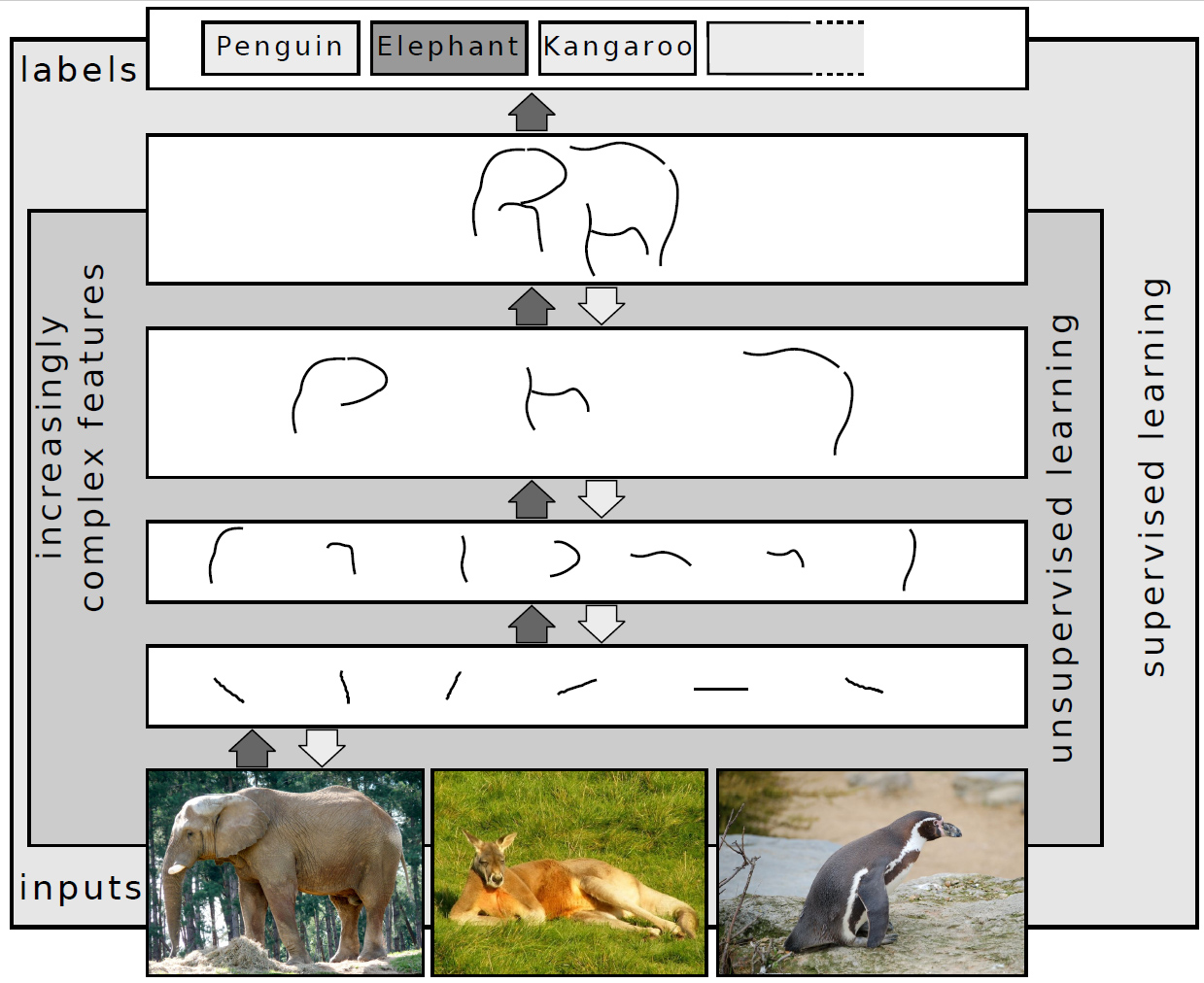
Deep learning algorithms work by using multiple layers of artificial neurons to process data. Each layer learns to recognize specific features, such as edges or shapes, and the output from each layer is used as input to the next layer. This process allows the algorithm to learn complex patterns in data, such as images or speech. For example, convolutional neural networks are commonly used for image classification tasks, while recurrent neural networks are used for speech recognition and natural language processing. The use of deep learning algorithms has also been shown to improve the accuracy of medical image analysis, with a study by Harvard University finding that deep learning algorithms can detect breast cancer from mammography images with an accuracy of 97.5%.
📊 Key Facts & Numbers
Some key facts about deep learning include its ability to learn from large datasets, its ability to improve over time, and its applications in a wide range of industries. According to a report by Research Firm, the global deep learning market is expected to reach $10.2 billion by 2025, growing at a CAGR of 31.4%. Key players in the field include Google, Microsoft, and NVIDIA. The use of deep learning has also been shown to improve the accuracy of medical image analysis, with a study by Harvard University finding that deep learning algorithms can detect breast cancer from mammography images with an accuracy of 97.5%. Other applications include natural language processing, machine translation, and bioinformatics.
👥 Key People & Organizations
Key people in the field of deep learning include Geoffrey Hinton, a Canadian computer scientist who is known for his work on backpropagation algorithms, and Yann LeCun, a French computer scientist who is known for his work on convolutional neural networks. Other notable researchers in the field include David Rumelhart and [[ronald-williams|Ronald Williams], who developed the backpropagation algorithm. Companies such as Google, Microsoft, and NVIDIA are also major players in the field, with significant investments in deep learning research and development. The use of deep learning has also been explored in other fields, such as healthcare and finance, with companies like IBM and Google investing heavily in deep learning research and development.
🌍 Cultural Impact & Influence
Deep learning has had a significant impact on culture and society, with applications in a wide range of industries, from healthcare to finance. The use of deep learning algorithms has also raised concerns about bias and fairness, with some critics arguing that the algorithms can perpetuate existing social inequalities. For example, a study by Stanford University found that a deep learning algorithm used to predict criminal recidivism was biased against African American defendants. Despite these concerns, deep learning has the potential to revolutionize many industries, from healthcare to finance. The use of deep learning has also been explored in other fields, such as education and transportation, with companies like Udacity and Waymo investing heavily in deep learning research and development.
⚡ Current State & Latest Developments
The current state of deep learning is one of rapid advancement, with new breakthroughs and applications being announced regularly. Recent developments include the introduction of transformers, a new type of neural network architecture that has been shown to be highly effective in natural language processing tasks. The use of deep learning has also been shown to improve the accuracy of medical image analysis, with a study by Harvard University finding that deep learning algorithms can detect breast cancer from mammography images with an accuracy of 97.5%. Other applications include natural language processing, machine translation, and bioinformatics.
🤔 Controversies & Debates
Despite the many benefits of deep learning, there are also controversies and debates surrounding its use. Some critics argue that the algorithms can be biased and unfair, while others argue that they can be used to perpetuate existing social inequalities. For example, a study by Stanford University found that a deep learning algorithm used to predict criminal recidivism was biased against African American defendants. Others argue that the use of deep learning algorithms can lead to job displacement and automation, with a report by McKinsey finding that up to 800 million jobs could be lost worldwide due to automation by 2030. The use of deep learning has also raised concerns about privacy and security, with some critics arguing that the algorithms can be used to collect and analyze sensitive personal data.
🔮 Future Outlook & Predictions
The future of deep learning is likely to be shaped by advances in computing power and data storage, as well as by the development of new algorithms and architectures. Some predictions include the widespread adoption of deep learning in industries such as healthcare and finance, as well as the development of new applications such as autonomous vehicles and smart homes. According to a report by Research Firm, the global deep learning market is expected to reach $10.2 billion by 2025, growing at a CAGR of 31.4%. The use of deep learning has also been explored in other fields, such as education and transportation, with companies like Udacity and Waymo investing heavily in deep learning research and development.
💡 Practical Applications
Deep learning has many practical applications, from computer vision to speech recognition. The use of deep learning algorithms has also been shown to improve the accuracy of medical image analysis, with a study by Harvard University finding that deep learning algorithms can detect breast cancer from mammography images with an accuracy of 97.5%. Other applications include natural language processing, machine translation, and bioinformatics. The use of deep learning has also been explored in other fields, such as healthcare and finance, with companies like IBM and Google investing heavily in deep learning research and development.
Key Facts
- Year
- 2022
- Origin
- United States
- Category
- ai-research
- Type
- concept
Frequently Asked Questions
What is deep learning?
Deep learning is a subfield of machine learning that uses artificial neural networks with multiple layers to analyze data. It is inspired by the structure and function of the human brain and has many practical applications, including computer vision, speech recognition, and natural language processing.
How does deep learning work?
Deep learning algorithms work by using multiple layers of artificial neurons to process data. Each layer learns to recognize specific features, such as edges or shapes, and the output from each layer is used as input to the next layer. This process allows the algorithm to learn complex patterns in data, such as images or speech.
What are some applications of deep learning?
Deep learning has many practical applications, including computer vision, speech recognition, natural language processing, and medical image analysis. It is also used in many industries, such as healthcare, finance, and transportation.
What are some challenges facing deep learning?
Some challenges facing deep learning include bias and fairness in algorithms, job displacement and automation, and the need for large amounts of data to train models. Additionally, deep learning algorithms can be computationally intensive and require significant resources to train and deploy.
What is the future of deep learning?
The future of deep learning is likely to be shaped by advances in computing power and data storage, as well as by the development of new algorithms and architectures. Some predictions include the widespread adoption of deep learning in industries such as healthcare and finance, as well as the development of new applications such as autonomous vehicles and smart homes.
How can I get started with deep learning?
To get started with deep learning, you can begin by learning the basics of machine learning and programming languages such as Python or R. You can also explore popular deep learning frameworks such as TensorFlow or PyTorch, and practice building models using publicly available datasets.
What are some resources for learning deep learning?
Some resources for learning deep learning include online courses such as Andrew Ng's Deep Learning course on Coursera, and books such as Deep Learning by Ian Goodfellow, Yoshua Bengio, and Aaron Courville. You can also explore research papers and articles on arXiv and other academic websites.
What are some real-world applications of deep learning?
Deep learning has many real-world applications, including computer vision, speech recognition, natural language processing, and medical image analysis. It is also used in many industries, such as healthcare, finance, and transportation. For example, Google uses deep learning algorithms to improve the accuracy of its search results, while Facebook uses deep learning algorithms to recognize and tag faces in images.
What are some potential risks and challenges associated with deep learning?
Some potential risks and challenges associated with deep learning include bias and fairness in algorithms, job displacement and automation, and the need for large amounts of data to train models. Additionally, deep learning algorithms can be computationally intensive and require significant resources to train and deploy. There are also concerns about the potential for deep learning algorithms to be used for malicious purposes, such as generating fake news or propaganda.